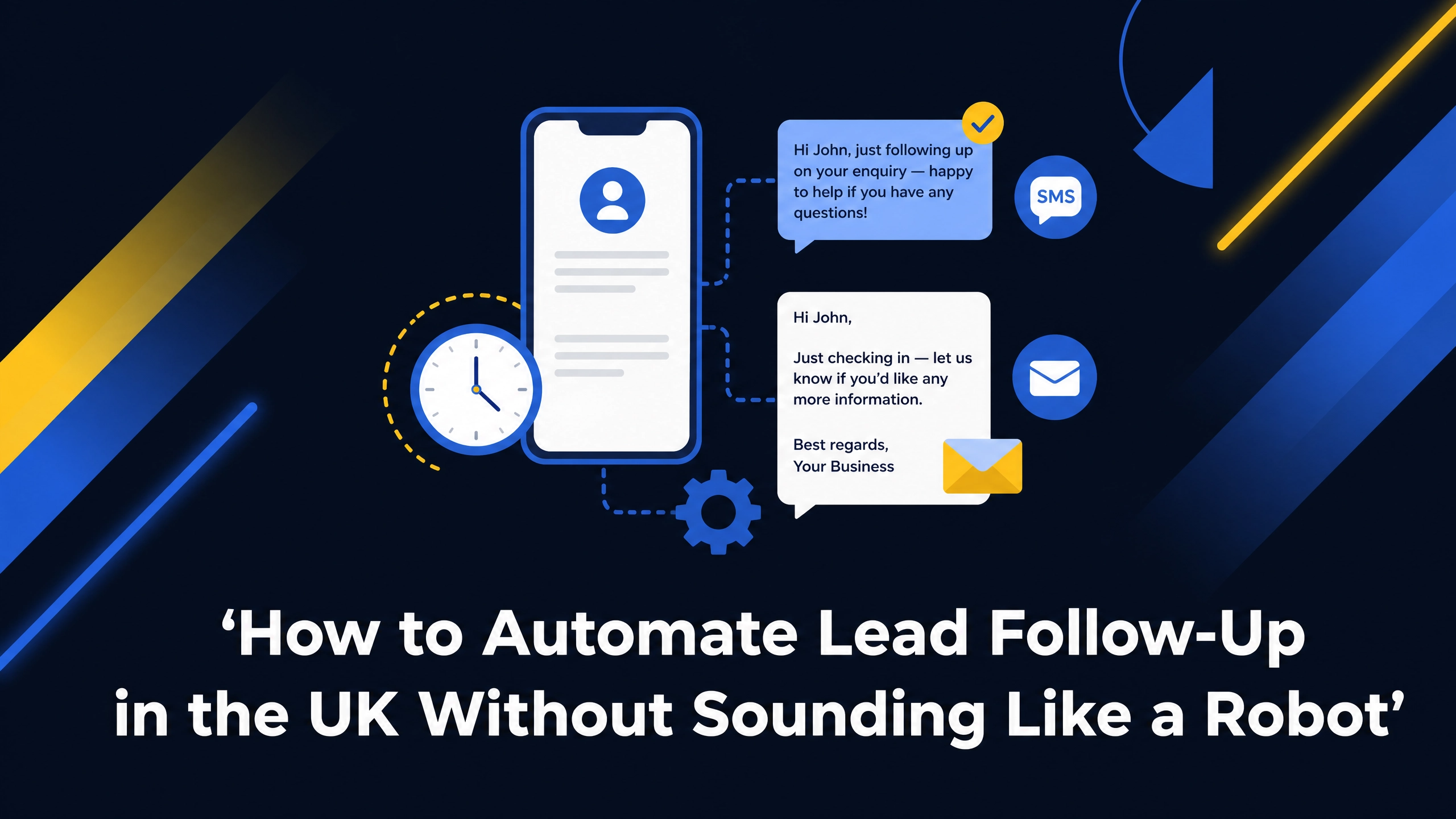
How to Automate Lead Follow-Up in the UK Without Sounding Like a Robot
Most UK service businesses do not have a lead generation problem. They have a follow-up problem. When a prospect submits an enquiry, they expect a response within minutes. If they do not get one, they move on to the next business on Google.
The challenge for owner-led businesses is capacity. You cannot be on tools, managing staff, quoting jobs, and instantly replying to every web enquiry at the same time. The solution is automation, but the fear of sounding robotic or impersonal stops many founders from implementing it.
Automating your lead follow-up in the UK does not mean sending generic, templated responses that alienate your prospects. It means building a system that acknowledges the enquiry immediately, sets clear expectations, and moves the prospect to the next logical step in your sales process while you are busy doing the actual work.
The Cost of Manual Follow-Up
Relying on manual follow-up is expensive. It is not just the time spent typing out emails or leaving voicemails. The real cost is the lost revenue from leads that go cold because you took too long to respond.
When a prospect contacts you, their intent is at its highest point. Every hour that passes reduces the likelihood of conversion. If an enquiry comes in at 7:00 PM on a Tuesday, and you do not reply until 9:00 AM on Wednesday, that prospect has had fourteen hours to find a competitor who answered the phone or had an automated system in place.
A proper system removes the reliance on memory and availability. It ensures that every single enquiry is treated with the same level of urgency and professionalism, regardless of how busy you are or what time of day it is.
Building a Human-Sounding Automation Sequence
The key to successful automation is acknowledging context. A robotic response says, "Thank you for your message. We will be in touch." A human-sounding automated response says, "Hi [Name], thanks for reaching out about [Service]. I'm currently on-site or with a client, but I have received your details. Are you free for a quick chat tomorrow morning to discuss what you need?"
The second example is automated, but it feels personal. It explains why you cannot speak right now (you are working, which is a good sign to a prospect), and it immediately prompts them for the next step (scheduling a call).
To build this effectively, you need a system that can trigger different responses based on how the lead came in and what they asked for.
Core Elements of a UK Lead Follow-Up System
A robust automated follow-up system for a UK business typically involves three core elements working together.
First, immediate acknowledgement via SMS. Text messages have a near-100% open rate. Sending a quick, polite text within two minutes of an enquiry submission confirms receipt and sets the tone.
Second, an email sequence that provides value. While the SMS handles the immediate acknowledgement, an automated email can follow up with more detailed information. This might include a link to your pricing guide, a case study relevant to their enquiry, or a calendar link allowing them to book a consultation at their convenience.
Third, internal notifications. Automation is not just about talking to the prospect; it is about alerting you. A good system will ping your phone or email to let you know a new lead has arrived, giving you the option to intervene manually if the enquiry is particularly high-value.
Why Off-the-Shelf Tools Often Fail
Many businesses attempt to build these sequences using disjointed tools. They might use Mailchimp for emails, a separate SMS provider, and Zapier to try and tie it all together with their website forms.
This approach creates fragility. When one tool updates its API or a Zap breaks, the whole sequence stops working, and you often do not realise until a prospect complains that they never heard back.
Furthermore, generic marketing platforms are rarely built with the specific needs of UK service businesses in mind. They lack the nuanced scheduling required to ensure automated texts are not sent at 3:00 AM, or they struggle to handle the specific data privacy requirements expected by UK consumers.
The FoundationsAI Approach
This is where a consolidated platform becomes necessary. Rather than trying to stitch together five different software subscriptions, a unified system handles the form capture, the SMS follow-up, the email sequence, and the internal notifications in one place.
FoundationsAI provides this infrastructure, built specifically for established, owner-led businesses. It replaces the fragmented, fragile setups with a single, robust engine.
While platforms like GoHighLevel offer similar technical capabilities, going direct means you are left to build, test, and troubleshoot the workflows yourself. FoundationsAI provides the strategic implementation. We do not just give you the software; we build the follow-up sequences, write the copy so it sounds like your business, and ensure the technical routing works flawlessly.
Automating your lead follow-up is the highest-leverage change you can make to your sales process. It stops leads falling through the cracks, buys you back hours of administrative time, and presents a highly professional image to every prospect from the very first interaction.